Αναρτήσεις

Coding in English Lessons- Part 2

Εικόνα
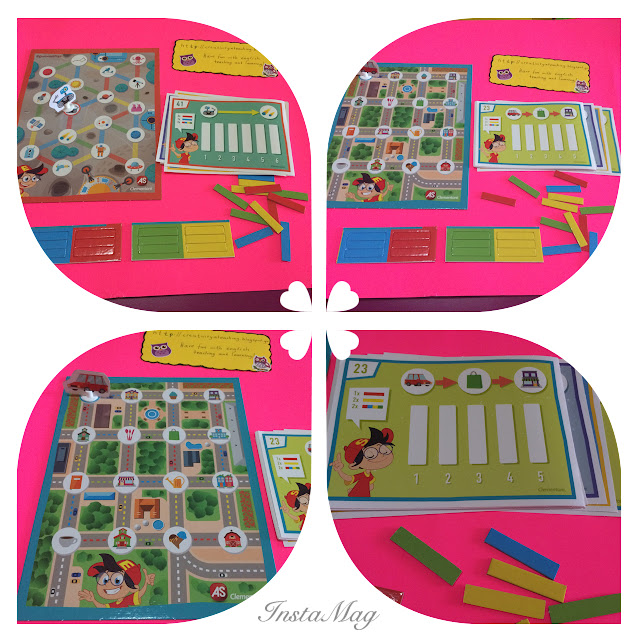
Coding and STEM in English lessons...Part 2 Using the material and props of the board game which is coding-oriented, I have organized a STEM activity about planets and solar system.   You can even make your lessons more vivid by using puzzles about planets or a globe! In this way you can help students make connections, understand the current positions and movements of the planets and realize where the Earth is in relation to the Sun and moon and planets. You can combine this activity with a visit to -NASA's website          https://solarsystem.nasa.gov/solar-system/our-solar-system/overview/ where you can set your orbital positions and travel around space as a planet!! Its is amazing!!! -or youtub e https://www.youtube.com/watch?v=RtU_mdL2vBM  to watch Earth from Space live!! For younger students I even made a spaceship with an alien!!!In fact I am going to use it in other activities as we...
Coding in English lessons- Part 1

Εικόνα
 Since we live in a society totally based on computer literacy and technological achievements, coding seems to be one of the most popular terms. Even younger generations seem to be using codes (even in primary stages)! So why not implementing coding in our English lessons so as to make students even more excited and interested? First of all you have to understand what coding is and how coding works. Coding is the primary method for allowing intercommunication between humans and machines. Computers are great but since they can't think for themselves (!), humans have to give them instructions that's why we use coding which is a list of step-by-step instructions that get computers to do what you want them to do. Coding makes it possible for us to create computer software, games, apps and websites.  When children learn to code, it helps them to develop essential skills such as problem solving, logic and critical thinking. Through coding, children can learn that ...

Museums, art, opera and realia in class

Εικόνα
My travel to Austria has equipped me with loads of realia, that is real items found in everyday life, which will help me teach ESL components effectively but most importantly in a highly creative way! Don't forget that the use of real life objects that students can touch, feel and why not smell and taste, makes our lesson more vivid So, let's start! Take a photo or a postcard of an opera house or a music hall (below: Vienna Opera House) and talk about the music history of a specific country. Compare it with your country's music and motivate them to visit https://www.youtube.com/watch?v=q8L4vvJFpBA so as to have them listen to Mozart Orchestra in Vienna Opera House. You can even show them Hansel and Gretel performance in Vienna Opera House on youtube https://www.youtube.com/watch?v=obffbOgOnbg. Moreover, a wide range of museum guides which I have collected from all my educational visits to museums will give me the opportunity to create some i...

Six pairs of thinking glasses

Εικόνα
Are you familiar with "Six Thinking Hats" system by Edward de Bono? Well, according to him ( de Bono, Edward (1985). Six Thinking Hats: An Essential Approach to Business Management . Little, Brown, & Company) there are s ix distinct directions of thinking process which are identified and assigned a color. The six directions are: Managing Blue – what is the subject? what are we thinking about? what is the goal? Someone can look at the big picture. Information White – considering purely what information is available, what are the facts? Emotions Red – intuitive or instinctive gut reactions or statements of emotional feeling (but not any justification). Discernment Black – logic applied to identifying reasons to be cautious and conservative. Practical, realistic. Optimistic response Yellow – logic applied to identifying benefits, seeking harmony. Sees the brighter, sunny side of situations. Creativity Green – statements of provocation and investigation, seei...

LEGOmania!! Part B

Εικόνα
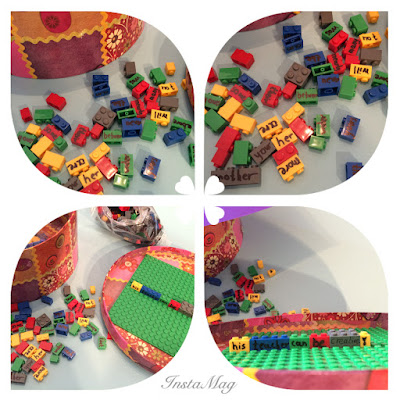
Apart from the storytelling activities and the syntax challenges (do consult Legomania Part A!), LEGOs is a fun way to teach grammar as well! A nice idea is to have a lego train or a simple toy train on which you can carry all the lego bricks which will repesent a different grammatical unit! LEGO grammar 1) You can teach the plural form of the nouns by writing  the different endings and various nouns on the bricks. Then you have to explain the different rules and formations through visualization and hands on practice. Have students experiment with the different endings and help them understand their proper use. LEGO plural form 2) You can teach tenses and their formation as well. It will be a great fun for students to make trains in present continuous or simple past and have the wagons rearranged in the interrogative or negative form. The examples will be so vivid that it is quite certain students will eventually eliminate the ed simple past ending or the...

LEGOmania!! Part A

Εικόνα
 Why play Lego bricks in classroom? The answer is simple! Students, especially those of younger age, are highly acquainted with them, as they spend a lot of time creating and recreating their own reality through them.  Therefore, LEGOs provide teachers with a great educational tool which offers a wide variety of grammar and vocabulary challenges not to mention storytelling prompts which students are more than willing to get involved with.  1) LEGO bricks can help students visualize many grammar rules and syntax structures which kids would find difficult and boring to deal with otherwise. You can teach syntax through LEGO bricks. You can use bricks of different size and shapes to create sequences as simple as Subject Verb Object in Affirmative structures to more complex ones such as comparative structures etc. LEGO syntax structures LEGO fun 2) LEGOs can be used to illustrate a story that is being taught in your lesson. You can ask students create a...

Art based activities: The Kiss by KLimt

Εικόνα
Responding to art can be very stimulating in lessons leading to a great variety of activities by simply describing a painting to more complex ones. Art can encourage students to become more involved using their language skills in the real world overcoming their fear of making mistakes. Teachers should take advantage of the potential which art has to develop students' creative and critical thinking skills as they can discuss how art depicts different aspect of their lives and urge them reflect on feelings, thoughts, problems depicted in paintings.You can ask students collect information about these paintings and present it in class. Another group of students can write about the possible feelings and thoughts of the characters painted, their possible life journey and even create a fictional story in which these characters are starring. There is a wide variety of activities which can be incoroporated in lessons! Sky is the limit! This time the activity has to do with one of my f...