Αναρτήσεις

Six pairs of thinking glasses

Εικόνα
Are you familiar with "Six Thinking Hats" system by Edward de Bono? Well, according to him ( de Bono, Edward (1985). Six Thinking Hats: An Essential Approach to Business Management . Little, Brown, & Company) there are s ix distinct directions of thinking process which are identified and assigned a color. The six directions are: Managing Blue – what is the subject? what are we thinking about? what is the goal? Someone can look at the big picture. Information White – considering purely what information is available, what are the facts? Emotions Red – intuitive or instinctive gut reactions or statements of emotional feeling (but not any justification). Discernment Black – logic applied to identifying reasons to be cautious and conservative. Practical, realistic. Optimistic response Yellow – logic applied to identifying benefits, seeking harmony. Sees the brighter, sunny side of situations. Creativity Green – statements of provocation and investigation, seei...

LEGOmania!! Part B

Εικόνα
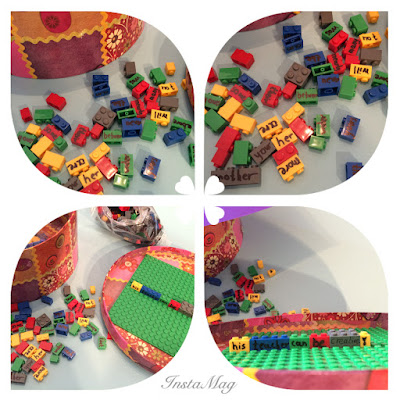
Apart from the storytelling activities and the syntax challenges (do consult Legomania Part A!), LEGOs is a fun way to teach grammar as well! A nice idea is to have a lego train or a simple toy train on which you can carry all the lego bricks which will repesent a different grammatical unit! LEGO grammar 1) You can teach the plural form of the nouns by writing  the different endings and various nouns on the bricks. Then you have to explain the different rules and formations through visualization and hands on practice. Have students experiment with the different endings and help them understand their proper use. LEGO plural form 2) You can teach tenses and their formation as well. It will be a great fun for students to make trains in present continuous or simple past and have the wagons rearranged in the interrogative or negative form. The examples will be so vivid that it is quite certain students will eventually eliminate the ed simple past ending or the...

LEGOmania!! Part A

Εικόνα
 Why play Lego bricks in classroom? The answer is simple! Students, especially those of younger age, are highly acquainted with them, as they spend a lot of time creating and recreating their own reality through them.  Therefore, LEGOs provide teachers with a great educational tool which offers a wide variety of grammar and vocabulary challenges not to mention storytelling prompts which students are more than willing to get involved with.  1) LEGO bricks can help students visualize many grammar rules and syntax structures which kids would find difficult and boring to deal with otherwise. You can teach syntax through LEGO bricks. You can use bricks of different size and shapes to create sequences as simple as Subject Verb Object in Affirmative structures to more complex ones such as comparative structures etc. LEGO syntax structures LEGO fun 2) LEGOs can be used to illustrate a story that is being taught in your lesson. You can ask students create a...

Art based activities: The Kiss by KLimt

Εικόνα
Responding to art can be very stimulating in lessons leading to a great variety of activities by simply describing a painting to more complex ones. Art can encourage students to become more involved using their language skills in the real world overcoming their fear of making mistakes. Teachers should take advantage of the potential which art has to develop students' creative and critical thinking skills as they can discuss how art depicts different aspect of their lives and urge them reflect on feelings, thoughts, problems depicted in paintings.You can ask students collect information about these paintings and present it in class. Another group of students can write about the possible feelings and thoughts of the characters painted, their possible life journey and even create a fictional story in which these characters are starring. There is a wide variety of activities which can be incoroporated in lessons! Sky is the limit! This time the activity has to do with one of my f...

Happy World Poetry Day!!

Εικόνα
As World Poetry Day approaches, which is celebrated on the 21st March,  it would be a nice idea to incorporate poetry-based activities in your English lessons. 1) Starting with the following poem Ars Poetica by Archibald MacLeish, you may request students identify the figurative language used in poetry such as metaphors, alliteration, onomatopoeia, personification, similes and hyperboles. 2) Next step is to underline the words that rhyme in the poem. 3) Since Ars Poetica , that means the Art of Poetry, was first written by Horace in which he advises poets on the art of writing poetry, you can have students read both poems and compare them. You may even resort to other poems as well which have been influenced by Horace's Ars Poetica like the Uses of Poetry by Williams Carlos Williams (1909),  Poetry by Marianne Moore (1919) or even a more modern one like Teaching the Ape to write Poem s by James Tate (1991). 4) Another activity would be to urge students come up w...

Happy World Puppetry Day!!

Εικόνα
On 21st March we celebrate World Puppetry Day!! Feel free to resort to pyppet-led storytelling or puppet-building activities because they create possibilities for creativity, collaboration, critical thinking, curiosity!. Due to their lightweight body full of movement and their extra ordinary mouth action, puppets are great for use in classrooms to bring our stories into life, engage role playing, trigger story telling activities, infuse elements from different cultures and countries into your lessons, practice speaking and listening skills. Finger puppets, glove puppets, rod puppets, shadow puppets, hand and rod puppet, hand and glove puppet, marionette, ventriloquist figures and stop action puppets can offer a wide variety of activities in your lessons! Give them a try! Hand puppet Shadow puppets Stick puppets Finger puppets Glove puppets Hand puppets Finger puppets String puppets String puppets Hand puppets Glove p...

Art history- based Storytelling activity -Part 2

Εικόνα
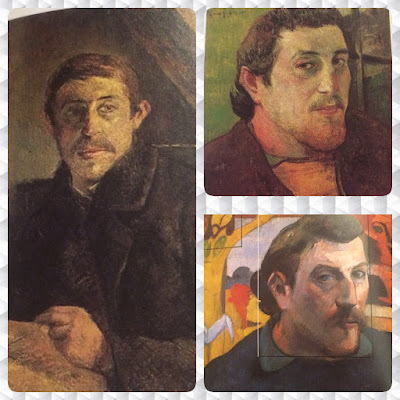
This storytelling activity has to do with art history. It will engage students research paintings, brainstorm and speculate on the painter's feelings, cooperate and present a project based on their work accomplished. Gauguin During the first stage you can bring in your classroom a single or a set of portraits your students should talk about. You should also divide your students into two teams who will be assigned activities interchangeably. This collage is a set of self portraits by Gauguin which represent different emotional states and thoughts each one corresponding to his life stages. The first activity I would recommend is to have the first team of students observe these portraits trying to recognize the character portrayed and the feelings depicted.  Not all students may know the artist and this will make the activity even more interesting because they will have a bias-free approach. Later on, students should try to narrate a story accompanying each painting and...